
In the guide

To fully understand this guidance, it is important to note the difference between the United Kingdom and Great Britain:
- UK: England, Scotland, Wales and Northern Ireland
- GB: England, Scotland and Wales
In this guide, the words 'must' or 'must not' are used where there is a legal requirement to do (or not do) something. The word 'should' is used where there is established legal guidance or best practice that is likely to help you avoid breaking the law.
This guidance is for England, Scotland and Wales
There is a legal requirement for certain products to be CE- or UKCA-marked when placed on the internal GB market. CE / UKCA marking is a key indicator of a product's compliance with legislation. By affixing the CE / UKCA mark on a product, a manufacturer is declaring conformity with all of the legal requirements to achieve CE / UKCA marking. This may mean that there is more than one set of legal requirements that apply to a product.
There are certain products that cannot use the CE mark and must use UKCA. However, most products can use either or both.
CE mark
The CE mark can be considered equivalent to the UKCA mark in the European Economic Area (EEA). It was used in the UK until Brexit. The original plan was to phase out the use of the CE mark, but for most products, the CE mark can continue to be used instead of, or as well as, the UKCA mark.
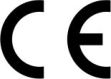
CE marking may be achieved in two different ways:
- examination by EU notified bodies. This means that the manufacturer must use an EU notified body (listed on the New Approach Notified and Designated Organisations (NANDO) information system) to test or review the product, which will enable the application of the CE mark
- self-declaration. This does not require any independent testing or review, and it is therefore the manufacturer's own statement that they believe the product meets the relevant regulations
If you are an importer of certain goods from the EEA (the European Economic Area, which is basically the EU Single Market), under transitional arrangements you will be permitted to have your details applied via a sticky label or on accompanying documentation - rather than on the goods themselves - until 31 December 2027. There are different rules for products such as construction products and transportable pressure equipment.
Back to topUKCA mark
The UKCA mark was created for exclusive use in Great Britain following Brexit. As mentioned above, today most products can use either or both marks, although there are exceptions.
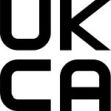
As for the CE mark, UKCA marking may be achieved in two different ways:
- examination by UK-approved bodies. This means that the manufacturer must use an approved body (such as those listed on the UKMCAB database) to test or review the product, which will enable the application of the UKCA mark
- self-declaration. This does not require any independent testing or review, and it is therefore the manufacturer's own statement that they believe the product meets the relevant regulations
Declaration of Conformity
A Declaration of Conformity (DoC) is required for both UKCA and CE marking. If you use both marks, you need two DoCs, one for each mark. See below for information on the Designated and Harmonised Standards that relate, respectively, to the two marks.
Back to topTechnical file
The DoC must be included in the technical file. Information on what should be included in the technical file is usually found in the Schedule or Annex to the relevant legislation. With toys, for example, Schedule 4 to the Toys (Safety) Regulations 2011 lists the relevant information that should be found in the technical file, while Schedule 6 includes the conformity assessment procedures.
Back to topConformity assessment
It is the manufacturer's responsibility to carry out the conformity assessment in accordance with the relevant safety legislation, bearing in mind that much safety legislation is product specific - for example, the Electrical Equipment (Safety) Regulations 2016 and the Toys (Safety) Regulations 2011 apply, respectively, to mains operated electrical equipment and products designed for use in play by children under the age of 14.
It is also the manufacturer's responsibility to document this process (including test reports and risk assessments), to issue the Declaration of Conformity (DoC) and to affix the CE / UKCA mark. The technical file must contain evidence that the appropriate conformity assessment process has been followed.
If a CE mark is applied, the DoC must reflect the design specification applied (EN Standards, for example); where the UKCA mark is used, this should reference the BS EN version of the Standard. There is usually no visual difference between a mandatory or self-declared CE / UKCA mark, so a small business or consumer cannot always tell whether the product has been formally verified by a third party or not. Therefore, distributors must take care, and must verify the presence of both the CE / UKCA mark and the necessary supporting documentation.
If a product requires a CE / UKCA mark but does not have one, it is illegal to place it on the GB market. However, do remember that not all products sold in GB need to bear CE / UKCA marking, so distributors must have a basic knowledge of the legal requirements. You should know what products must bear the CE / UKCA mark and the accompanying documents required, and should be able to identify products that are clearly not in compliance.
The GOV.UK website contains more detailed information on the CE mark and the UKCA mark, including guidance on placing manufactured goods on the GB market.
Consumer products that must bear a conformity mark include:
- aerosols
- ecodesign - that is, energy consuming products such as air heating / cooling products, white goods, computers, lighting products, solid fuel boilers and transformers
- electrical goods designed or adapted for use between 50 and 1,000 volts (in the case of alternating current) and 75 and 1,500 volts (in the case of direct current); this covers domestic electrical equipment and equipment that is intended for use in the workplace. Also:
- electromagnetic capability for electric and electronic equipment
- electronic equipment that contains substances such as cadmium and mercury (restriction of hazardous substances - RoHS)
- equipment for use outdoors, particularly in relation to noise emissions
- gas appliances
- machinery
- medical devices such as thermometers, plasters and bandages, contact lens solutions, and pregnancy testing kits
- personal protective equipment, such as sunglasses, protective gloves, goggles, protective clothing and helmets
- pyrotechnics - for example, fireworks
- radio equipment, which includes connected goods
- recreational craft and personal watercraft
- simple pressure vessels
- toys
Designated and Harmonised Standards
Designing a product to comply with Designated and Harmonised Standards can be used to show a presumption of conformity with safety legislation; in other words, if a product is designed and constructed by following what the Standard says, it is presumed that the product complies with the essential product requirements laid down in the law.
Designated Standards are those approved by the Secretary of State and published by the British Standards Institution (BSI). Harmonised Standards are those for which references have been published in the Official Journal of the European Union (OJEU).
Designated Standards are used for UKCA conformity marking, and Harmonised Standards are used for CE conformity marking (these Standards are usually the same; the Designated Standard is the 'BS EN' version). Both marks are valid for the GB market.
Back to topWeighing and measuring equipment
For information on how these marks apply to weighing and measuring equipment, please see 'Weighing equipment for legal use'.
Back to topTrading Standards
For more information on the work of Trading Standards services - and the possible consequences of not abiding by the law - please see 'Trading Standards: powers, enforcement and penalties'.
Back to topIn this update
The guide has been reinstated, with information about Designated and Harmonised Standards being added, along with other general information.
Last reviewed / updated: December 2025
Back to topKey legislation
- assimilated Regulation (EC) No 765/2008 setting out the requirements for accreditation and market surveillance relating to the marketing of products
Please note
This information is intended for guidance; only the courts can give an authoritative interpretation of the law.
The guide's 'Key legislation' links go to the legislation.gov.uk website. The site usually updates the legislation to include any amendments made to it. However, this is not always the case. Information on all changes made to legislation can be found by following the above links and clicking on the 'More Resources' tab.